 Website Development
Laravel Development in Hyderabad
Laravel Development in Hyderabad | HyderHub Web Services
Explore Laravel Development in HyderabadHyderHub builds Node.js backends for Hyderabad businesses connecting websites, data services and external platforms, with planned API behaviour, failure handling and operational responsibilities for each integration.
Keep application requests and external updates moving through defined paths
Last updated October 28, 2026
HyderHub offers Node.js development in Hyderabad for backend APIs, webhooks and connected applications. Discuss data flows, reliability and project scope.
A request accepted by one system may still fail before the next system receives a usable update.
The same provider notification creates duplicate records in your application.
Agreed duplicate detection can recognise events that have already been processed.
Customers wait indefinitely when an external service stops responding.
Defined timeouts can return a controlled response and trigger an agreed recovery path.
Staff cannot tell whether a scheduled data import finished successfully.
Scoped job status records can distinguish completed work from failed or pending imports.
Clear boundaries between receiving, processing and completing work make these situations easier to investigate.
Node.js runs JavaScript outside the browser and can support APIs, integration services and background processing. HyderHub can propose a backend around the information your applications exchange, including how requests are validated, stored and acknowledged. A useful brief describes failure paths as carefully as successful ones.
For example, a Hyderabad service business might receive booking requests online and send confirmed records to an external scheduling platform. An illustrative Node.js service could validate each request, record its processing status and handle the platform's response. Actual booking rules, capacity checks and notification behaviour would need agreement before implementation.
A frontend can display a confirmation, but the server must decide whether a request is valid and what changes are allowed. When websites, mobile clients and partner tools share data, inconsistent backend rules can create conflicting records or confusing responses.
Define which system owns each record and how other systems learn about changes. This helps place Node.js work within a broader website development project. It also clarifies whether you need a small integration service, a new application backend or changes to an existing implementation.
These intended benefits depend on the processing rules agreed for your service.
HyderHub can propose selected backend work around documented data exchange requirements.
An API can serve several interfaces while keeping business decisions on the server. Define permitted operations, pagination, response fields and access checks for each client. A mobile screen and an administrator dashboard may need different data even when they use the same underlying records.
A webhook delivers an event when something changes elsewhere. Plan how the sender is verified, how repeated or delayed events are interpreted, and what happens after a processing error. Third-party API integration may require both outbound requests and incoming event handling within the same workflow.
Some operations should continue independently of a browser request. A queued job can support that design, but it introduces decisions about retries, duplicate execution and failed work. Long calculations may need worker threads, separate processes or another service so they do not hold up unrelated requests.
Runtime selection alone cannot determine capacity, security or operational readiness.
A practical proposal should explain what happens when a provider is unavailable, a message arrives twice or an account loses access. These decisions determine how useful the service will be after a successful demonstration becomes everyday operation.
The proposed HyderHub approach is to document data ownership, request contracts and acceptance scenarios before building dependent features. Ask which operational tools are part of delivery and which need an ongoing arrangement. You can discuss your backend requirements using an example request and its expected outcome, with private customer information removed.
A Hyderabad business connecting booking, enquiry or order systems should clarify local working dates, time zones and the format of customer contact fields. A scheduled task needs an explicit time basis, especially when providers or customers operate elsewhere. Agree how timestamps are stored and how staff see them.
Operational responsibilities also matter: who reviews an import that fails overnight, and who can reconcile a disputed transaction? These are delivery and ownership questions. A backend service does not need locality keywords in API responses, and its development does not itself establish search rankings or local discovery.
The handover list should match the backend scope confirmed in your agreement.
Website Development
Laravel Development in Hyderabad | HyderHub Web Services
Explore Laravel Development in Hyderabad
Website Development
React.js Development in Hyderabad | HyderHub Web Services
Explore React.js Development in Hyderabad Website Development
Build a conversion-focused Shopify store with HyderHub Web Services in Hyderabad. Custom storefronts, theme setup, payments, apps and scalable eCommerce solutions.
Explore Shopify Development
Website Development
WooCommerce Development in Hyderabad | HyderHub Web Services
Explore WooCommerce Development
Website Development
PHP Website Development in Hyderabad | HyderHub Web Services
Explore PHP Website Development Website Development
Development of the interfaces, navigation and interactions that visitors use in their browser.
Explore Frontend DevelopmentUnderstand the stages, review points and handover before your project begins.
Clarify your goals, audience and requirements before agreeing the project scope.
Plan the structure, deliverables and dependencies so the project has a clear direction.
Review layouts and navigation before developing the main features.
Build the approved pages and features, with the integrations your project requires.
Check the agreed deliverables and key user journeys before sign-off.
Complete the handover and explain the support or maintenance included in your agreement.
Explore our website projects across industries and platforms. Open a project to see the design, content and features in use.
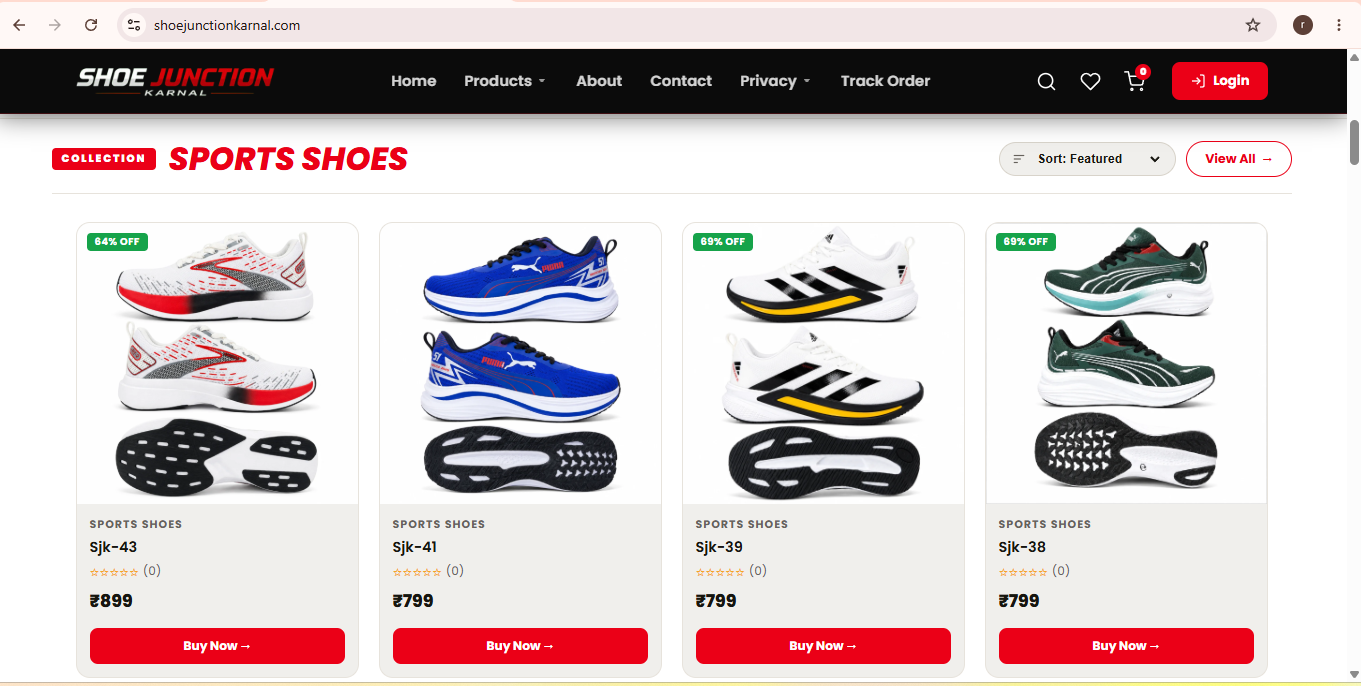
Full e-commerce store with Razorpay and Cashfree payments, Manual QR/UPI with screenshot upload, WhatsApp order flow, variant-level stock tracking, and a redesigned admin panel.
Visit website
Location-targeted healthcare website for a home nursing and elderly care provider in Nellore, with individual pages for home nursing, ICU care, post-surgery care, and physiotherapy, plus WhatsApp/click-to-call booking.
Visit website
Multi-service corporate website for an IT consulting and staffing company, with dedicated service pages, a technology-stack showcase, and an FAQ structure built for enterprise buyers.
Visit website
NGO website with Razorpay (India) and PayPal (international) donation integration, a program-wise photo/video gallery, and SEO content built around Jana Bhavitha's four pillars: Vidya, Arogya, Arthikam, and Sadhikaratha.
Visit website
Jana Bhavitha Charitable Trust is a non-profit organization in Kowtala, Telangana, dedicated to uplifting underserved communities through education, healthcare, financial empowerment, and social awareness.
Visit websiteLightweight, fast-loading personal portfolio website built for clarity and easy maintenance, with on-page SEO fundamentals for branded name searches.
Visit websitePersonal-brand website for a Hyderabad career counsellor, with life-stage-specific service pages (after 10th, after intermediate, after graduation, working professionals) built for local search.
Visit websiteServices website for a Tampa-based cloud, AI, and data engineering consultancy, structured for B2B lead generation with clear navigation between technology, services, and company pages.
Visit website
Enterprise-ready website for a US-based IT consulting firm offering cloud, cybersecurity, and healthcare IT services, with service-segmented landing pages built for B2B search visibility.
Visit website
Consulting-style business website covering software development, outsourcing, and digital transformation services, with structured sections for partners, technologies, and FAQs.
Visit websiteOur most chosen plan for growing local businesses.
For businesses that need more pages and custom functionality.
For larger businesses needing a fully custom PHP/MySQL build.
Not sure which plan fits your business? Use our free cost calculator for an instant estimate, or see full pricing details →
| Request contracts | Define inputs, responses and error codes | Agree endpoint names alone |
| Webhook handling | Validate events and identify duplicate deliveries | Process every delivery as new |
| Slow dependencies | Set timeouts and bounded retry rules | Wait without a defined cutoff |
| Background processing | Track queued work and failed jobs | Treat submission as completed work |
| Operational visibility | Plan useful logs and health signals | Investigate from user complaints alone |
Personal-brand websites for consultants, coaches, and individual professionals.
church website designing in telangana hyderabad
Community-focused websites for churches and religious organizations.
Online stores built for real sales — product catalogs, payments, and order tracking.
Admission-ready websites with course listings for schools, coaching centres, and career counsellors.
Patient-friendly websites with appointment booking for clinics, nursing services, and healthcare providers.
Corporate-credible websites and service pages for IT firms, consultancies, and B2B service providers.
Corporate websites for IT consulting, staffing, and technology service firms.
test
Donation-ready websites for trusts and non-profits, built for donor trust and multi-program storytelling.
Donation-ready websites with program showcases for trusts, NGOs, and charitable organisations.
Gallery and WhatsApp-ordering websites with local SEO for restaurants, retail stores, and local brands.
Admission-focused websites for schools, colleges, and coaching institutes.
Booking-ready websites for travel agencies and tour operators.
HyderHub Web Services provides professional website design services across Hyderabad — including responsive website development, ecommerce websites, SEO-friendly business websites, and modern web design solutions for startups and local businesses.
Fill in your details and get an instant, personalised response straight to your WhatsApp — no waiting, no spam.
We shortlisted three agencies and ultimately chose HyderHub as our website design agency in Hyderabad — and we were not disappointed. Our coaching academy needed a website that would appeal to students and parents equally. The team built a clear, structured site with course details, faculty profiles, success stories, and an online
Yes, a Node.js backend can supply data and receive requests from suitable web or mobile clients. The connection needs agreed API formats, authentication and server-side access rules. The backend and client remain separate delivery responsibilities. A React.js interface can be considered alongside the service when you also need browser screens.
The database should follow the structure of your records, consistency requirements, query patterns and existing infrastructure. Node.js does not require one particular database. Orders with related transactions may have different needs from flexible event records. Clarify reporting, backups and schema changes before selection; replacing an existing database should have a clear operational reason and a migration plan.
Duplicate handling usually needs a stable event identifier and a record of processing outcomes. The exact design depends on the provider and the action being performed. A repeated event should not unintentionally create another order or send another charge request. Delayed events and interrupted processing also need defined rules; duplicate protection is a scoped implementation task rather than an automatic Node.js feature.
Real-time updates can be proposed using a suitable connection method and supporting infrastructure. First define what must update, how quickly it needs to appear and which users can receive it. Reconnection, missed events and hosting compatibility need planning too. Live notifications are separate from basic request-and-response APIs and should be explicitly identified in the project requirements.
The design can set timeouts, control concurrent requests and move appropriate work into background processing. Recovery behaviour must match the operation: retrying a read differs from retrying a transaction that might already have succeeded. Your proposal should identify the relevant limits and escalation path. Provider performance and availability remain external dependencies that application code cannot guarantee.
A focused repair may be possible after reviewing the source, runtime version, dependencies and the steps that reproduce the issue. Logs and a representative test environment can help distinguish application defects from provider or hosting failures. The assessment should explain whether a targeted change is appropriate and what regression checks are needed before modifying a working production service.
The scope should identify input validation, authentication, authorisation and protection of configuration secrets. Depending on the endpoints, it may also cover request limits, provider signature checks and safe logging. These controls need review against actual threats and data handling requirements. A specialist security assessment or a regulatory compliance review requires separate agreement and cannot be assumed from the runtime choice.
Deployment needs hosting that can run the chosen Node.js version and required application processes. Confirm how configuration, process restarts, network access and logs are managed, together with any database or queue connections. Some shared hosting plans may not support the proposed design. Account permissions should be provided securely and limited to the tasks required for the agreed deployment.
Capacity should be checked against a defined workload, including endpoint mix, data size, concurrent activity and provider limits. Response times and errors need to be observed in a representative environment. The results guide changes to queries, processing or infrastructure. Performance and load testing can be scoped separately; choosing Node.js alone does not establish a supported user count.
Those responsibilities belong in the operating agreement. Identify who receives alerts, reviews failed jobs, approves dependency updates and authorises production changes. Delivery can include the relevant guidance or tooling where agreed, while continuing incident response and maintenance need their own coverage. Provider account renewals and infrastructure charges should also have named owners so essential services do not lapse unnoticed.

 Web Design
Looking for a reliable website designer near Begumpet? Here's what actually matters when comparing local optio…
Read More Web Design
Trying to decide between a freelance website designer and a full agency? Here's an honest breakdown of the tra…
Read More Web Design
Wondering what a church website actually costs in Hyderabad? Here's a straightforward breakdown of pricing, fe…
Read More